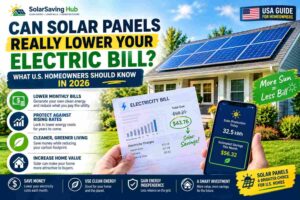

Electricity bills continue to be a major household expense for homeowners across the United States. As utility rates increase, many people are looking for smarter ways to manage their energy costs. One solution gaining popularity is residential solar energy.
But how much can you actually save by installing solar panels in 2026?
The answer depends on several factors, including your location, electricity usage, solar system size, installation costs, and local utility policies. For some homeowners, solar panels can significantly reduce monthly electricity bills and provide substantial long-term financial benefits.
In this guide, we will explore solar panel savings, how solar systems reduce electricity expenses, what affects your potential savings, and how to calculate whether solar energy is a worthwhile investment for your home.
How Much Money Can You Save With Solar Panels in 2026?
Solar panels can help homeowners save thousands of dollars over the lifetime of their systems. According to 2026 EnergySage estimates, the average U.S. homeowner could save approximately $60,500 over 25 years by switching to solar.
However, this is an estimate rather than a guaranteed return. Actual savings vary depending on electricity prices, system costs, energy production, financing, and available incentives.
For example, homeowners living in areas with expensive electricity may experience greater savings than those in regions where electricity is relatively inexpensive.
The biggest advantage of solar energy is that you generate electricity from sunlight instead of purchasing all your electricity from your utility company.
7 Factors That Affect Solar Panel Savings
Not every homeowner receives the same financial benefits from solar energy. Understanding the following factors can help you estimate your potential savings.
1. Your Current Electricity Bill
Your existing electricity bill is one of the most important factors when calculating solar panel savings.
Homeowners with higher monthly electricity expenses often have more opportunities to reduce their energy costs by generating their own electricity.
For example:
- A homeowner paying $100 per month spends $1,200 annually.
- A homeowner paying $200 per month spends $2,400 annually.
- A homeowner paying $300 per month spends $3,600 annually.
If a properly sized solar system offsets a significant portion of your electricity consumption, your monthly utility expenses could decrease considerably.
2. Your Location and Sunlight Exposure
Where you live has a major impact on how much electricity your solar panels generate.
Homes in sunny states such as Arizona, California, and Texas generally have favorable conditions for solar energy production.
However, solar panels can also work effectively in areas with less sunlight. Their performance depends on sunlight availability, roof direction, shading, weather conditions, and system design.
Before installing solar panels, consider getting a professional assessment of your roof and estimated annual energy production.
3. Solar Panel System Size
The size of your solar system determines how much electricity it can generate.
A larger system generally produces more electricity, but installing a system that is bigger than your actual energy requirements may not provide the best financial return.
Your ideal system size should be based on:
- Monthly electricity consumption.
- Available roof space.
- Local sunlight conditions.
- Electricity rates.
- Utility net metering policies.
Choosing the right system size can help maximize your solar energy savings without unnecessary installation expenses.
4. Solar Panel Installation Costs
Installation costs directly influence your overall return on investment.
Your total solar installation price may include:
- Solar panels.
- Inverters.
- Mounting equipment.
- Electrical components.
- Labor and installation.
- Permits and inspections.
According to EnergySage’s 2026 marketplace data, the average quoted solar installation price was approximately $2.59 per watt.
However, actual prices vary by location, equipment, installer, and system requirements.
Comparing multiple solar installation quotes can help you find a suitable system at a competitive price.
5. Available Solar Incentives and Rebates
Government incentives and local utility programs can influence the upfront cost of installing solar panels.
In 2026, homeowners should carefully check which federal, state, and local incentives are currently available.
One important change for U.S. homeowners is that the federal Residential Clean Energy Credit under Section 25D is no longer available for qualifying residential expenditures made after December 31, 2025.
However, state-level incentives, utility programs, and other qualifying local benefits may still be available depending on your location.
Always verify current eligibility requirements before including incentives in your solar savings calculation.
6. Net Metering and Utility Policies
Net metering can help homeowners receive credits for excess electricity their solar systems send to the power grid.
For example, if your solar panels generate more electricity than your home needs during the afternoon, the extra energy may be exported to the utility grid.
Depending on your utility’s policies, you may receive credits that help offset electricity consumed at other times.
However, compensation rates and eligibility rules differ between utilities and states.
Understanding your local net metering policy is essential before purchasing a solar system.
7. Solar Financing Options
How you pay for your solar system can significantly affect your overall savings.
The most common options include:
Cash Purchase: You purchase the system upfront and own the equipment. This can provide stronger long-term financial returns because you avoid ongoing loan interest.
Solar Loan: You finance the installation and repay the loan over time. Your monthly loan payment should be compared with your expected electricity bill savings.
Solar Lease or PPA: A third-party provider owns the equipment, and you pay according to the terms of your agreement. Your savings depend on the contract price, utility rates, and escalator provisions.
Always compare the total costs and expected savings before choosing a financing option.
How to Calculate Your Solar Panel Savings
Calculating potential solar savings does not have to be complicated.
You need to understand three basic numbers:
- Your current annual electricity expenses.
- Your estimated annual savings from solar.
- Your total solar system investment.
A simple way to estimate your net savings is:
Net Solar Savings = Total Avoided Electricity Costs − Total Solar System Costs − Other Solar Expenses
Let’s consider a hypothetical example.
Suppose your household spends $200 per month on electricity.
- Monthly electricity bill: $200
- Annual electricity expenses: $2,400
- Estimated electricity costs offset by solar: 80%
- Estimated annual savings: $1,920
- Solar system installation cost: $15,000
Your simple payback period would be approximately 7.8 years, assuming the annual savings remain constant and excluding financing, maintenance, and other additional costs.
After the system reaches its payback point, continued electricity bill savings can provide additional financial benefits.
Actual results may differ because electricity prices, solar production, equipment performance, and utility compensation can change over time.
Solar Panels vs. Traditional Electricity: Which Saves More Money?
Traditional electricity requires homeowners to purchase power from their utility provider every month.
Solar energy allows homeowners to generate some or most of their electricity independently.
Here is a simple comparison:
| Feature | Traditional Electricity | Solar Energy |
|---|---|---|
| Monthly energy expenses | Ongoing utility bills | Potentially reduced bills |
| Electricity source | Utility grid | Sunlight |
| Long-term savings | Depends on utility rates | Potentially substantial |
| Initial investment | Usually no equipment purchase | Installation investment |
| Energy price control | Limited | Greater control over generation costs |
| Environmental impact | Depends on grid energy mix | Renewable electricity |
For homeowners with suitable roofs and favorable electricity rates, solar energy can provide attractive long-term savings.
Additional Ways to Maximize Solar Panel Savings
Installing solar panels is only the first step. You can improve your overall savings by making smarter energy decisions.
Here are some practical tips:
- Use electricity during daylight hours: Run appliances such as washing machines and dishwashers when your panels are producing electricity.
- Choose energy-efficient appliances: Efficient appliances reduce overall electricity consumption.
- Keep solar panels clean: Remove accumulated dust and debris when appropriate to maintain system performance.
- Monitor your solar production: Track electricity generation and household consumption to identify opportunities for improvement.
- Consider battery storage: A home battery can store excess solar electricity for use when your panels are not producing enough power.
- Compare installation quotes: Review equipment quality, warranties, installation costs, and financing terms before making a decision.
These steps can help you get more value from your solar investment.
Are Solar Panels Worth It in 2026?
For many homeowners, solar panels can be a worthwhile long-term investment.
However, the financial benefits depend on individual circumstances.
Solar energy may be particularly attractive if:
- Your monthly electricity bills are relatively high.
- Your roof receives sufficient sunlight.
- You plan to stay in your home for several years.
- Your local electricity rates are expensive.
- Your utility offers favorable solar export credits.
- Your installation costs are competitive.
On the other hand, homes with significant roof shading, low electricity consumption, or unfavorable utility compensation policies may experience lower financial returns.
The best approach is to calculate your potential savings using your actual electricity usage and local solar installation prices rather than relying on general estimates.
Final Thoughts: Start Calculating Your Solar Panel Savings
Solar energy offers homeowners an opportunity to reduce electricity expenses and gain greater control over their long-term energy costs.
Although solar panel savings vary from one household to another, the right solar system can provide meaningful financial benefits over its lifetime.
Before making a decision, compare installation quotes, review available incentives, understand your utility’s net metering policies, and calculate your expected return on investment.
Want to know whether solar is right for your home?
Visit SolarSavingsHub.com to explore your potential solar savings and learn more about making an informed solar investment.
Frequently Asked Questions (FAQs)
1. How much can you save with solar panels in 2026?
Your savings depend on electricity rates, system size, installation costs, and energy consumption. EnergySage estimates average U.S. homeowner savings of approximately $60,500 over 25 years, although individual results vary.
2. Do solar panels really reduce electricity bills?
Yes. Solar panels generate electricity for your home, which can reduce the amount of power you need to purchase from your utility company.
3. How long does it take for solar panels to pay for themselves?
The payback period depends on installation costs, electricity savings, financing, and local incentives. Some systems recover their costs faster than others.
4. Do solar panels work on cloudy days?
Yes. Solar panels can generate electricity on cloudy days, although their production is generally lower than during sunny conditions.
5. Will I still receive an electricity bill after installing solar panels?
You may still receive an electricity bill because of utility connection fees, nighttime electricity usage, and electricity purchased from the grid.
6. Are solar panels worth the investment in 2026?
Solar panels can be a worthwhile investment for homeowners with suitable roofs, favorable electricity rates, and competitive installation prices. Calculating your individual return is the best way to decide.
7. Can solar panels increase home value?
Solar panels may increase a property’s appeal and value, particularly when the system is owned outright. The actual impact depends on the local housing market and system condition.