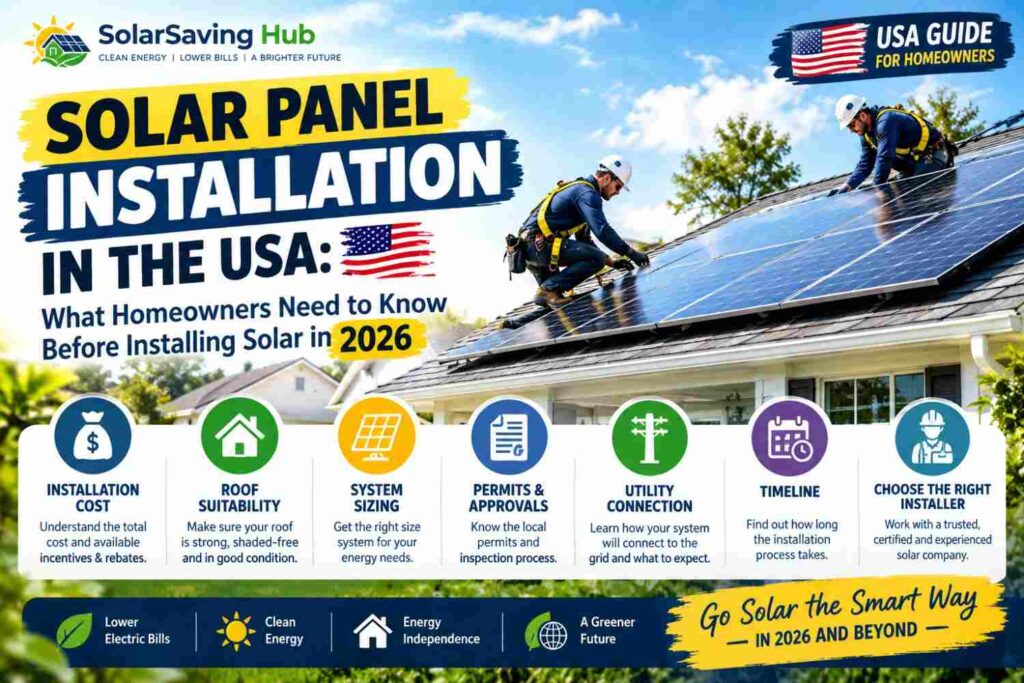
Solar Panel Installation in the USA: What Homeowners Need to Know Before Installing Solar in 2026

Thinking about going solar this year? Solar panel installation is one of the biggest home improvements most families will ever make, and knowing what to expect before you sign a contract can save you thousands of dollars and weeks of frustration. This guide walks through the full solar panel installation process in 2026, from your first site visit to the day your system finally switches on.
How Long Does Solar Panel Installation Actually Take?
Here’s the part that surprises most homeowners: the physical work is fast, but the paperwork is not.
The actual solar panel installation on your roof typically takes just 1 to 3 days for a standard residential system. But the full timeline from signed contract to a system that legally produces power runs 6 to 12 weeks on average, and in some markets it stretches to 2 to 5 months.
Why the gap? Because most of a solar panel installation timeline is spent waiting on permits and utility approval, not on labor. Here’s a realistic national breakdown:
| Stage | Typical Timeline |
|---|---|
| Site assessment and design | 1 to 4 weeks |
| Permitting | 2 to 8 weeks |
| Physical solar panel installation | 1 to 3 days |
| Inspection | A few days to 2 weeks |
| Utility interconnection (PTO) | 2 to 12 weeks |
If you’re adding a battery to your solar panel installation, add roughly 30% to that total timeline.
The Solar Panel Installation Process, Step by Step
1. Site Assessment
Before any solar panel installation work begins, your installer visits to measure your roof, check your electrical panel capacity, evaluate shading, and note any repairs needed. This is also when HOA paperwork gets collected if it applies to you.
2. System Design and Engineering
Engineers design a system sized to your energy use and local building code, then produce a stamped plan set. This usually takes around two weeks for a straightforward residential solar panel installation.
3. Permitting
Your installer submits building and electrical permit applications to your local Authority Having Jurisdiction (AHJ). Permit review can take anywhere from a few days in cities using SolarAPP+ to well over a month in slower jurisdictions. Historic districts and HOAs can add more time.
4. Installation Day
This is the fast part. Crews mount racking, attach panels, run wiring, and set the inverter. Most residential solar panel installation jobs wrap up in one to three days. You generally don’t need to supervise, though crews may need access to your garage or electrical panel.
5. Inspection
A local building inspector verifies the solar panel installation meets safety and code requirements. Scheduling depends on your municipality’s backlog.
6. Permission to Operate (PTO)
This is the final approval from your utility, and it’s the step that blindsides people most often. Even with panels fully installed and inspected, your system cannot legally produce power until PTO is granted. Solar only systems average 4 to 6 weeks for PTO in 2026, though some utilities in high adoption states are running 60 to 90 days.
Permits Are Mandatory, Not Optional
Solar panel permit requirements are legally required in virtually every U.S. jurisdiction. A standard residential solar panel installation needs, at minimum:
- A building permit
- An electrical permit
- A utility interconnection agreement
Skipping any of these can result in forced removal of your system, fines, and loss of net metering eligibility. Your installer should pull all permits as standard practice. If an installer asks you to pull your own permits, treat that as a red flag, since it shifts liability onto you if something goes wrong.
Can You Do a DIY Solar Panel Installation?
Technically, DIY solar is legal in most states, but roughly 97% of installations are done professionally, and for good reason. For grid tied systems (the vast majority of residential solar), DIY solar panel installation is impractical or outright prohibited because:
- Electrical codes require a licensed professional to design and sign off on the system
- Utilities require licensed contractors to install interconnection equipment
- Many homeowners insurance policies void coverage for unlicensed electrical work
- Inspectors will reject work done without licensed contractor sign off
Off grid battery systems are the rare exception where DIY makes practical sense, but that applies to very few households.
Check Your Roof Before You Schedule Solar Panel Installation
This is one of the most costly mistakes homeowners make. Solar panels are mounted for 25 to 30 years. If your roof needs replacement within the next several years, do the roof first.
Removing and remounting panels for a roof replacement later costs $2,000 to $5,000 and can void some workmanship warranties. A roof with less than 10 years of life left should be addressed before your solar panel installation, not after.
What Solar Panel Installation Costs in 2026
Expect to pay roughly $2.50 to $3.50 per watt installed, putting a typical home system somewhere between $18,000 and $31,000 before incentives.
An important 2026 update: the 30% federal residential solar tax credit (Section 25D) expired on December 31, 2025. Homeowners buying a system with cash or a loan no longer receive that credit. Leases and PPAs still carry Section 48E benefits through 2027, where the financing company claims the credit and may pass savings along through lower payments.
State incentives, local rebates, property tax exemptions, and net metering programs remain widely available and are more important to your solar panel installation math than ever.
How to Choose a Solar Panel Installation Company
The installer you pick matters more than the panel brand. Before signing:
- Get at least three quotes and compare them using cost per watt, not just total price.
- Verify licensing and insurance for your state.
- Ask about the permit timeline in your specific jurisdiction. In some areas permits take 6 to 10 weeks, and knowing this upfront sets realistic expectations.
- Review warranties carefully. Look at both the equipment warranty and the installer’s workmanship warranty.
- Ask who pulls the permits. The answer should always be the installer.
- Understand your net metering policy before you sign, since it directly affects your long term savings.
Financing Your Solar Panel Installation
Your best option depends on your situation:
- Cash purchase: Maximizes lifetime savings and resale value, but requires the most upfront capital.
- Solar loan: Balances affordability with ownership benefits. The most common choice for homeowners.
- Lease or PPA: Low or no upfront cost and reduced risk, but typically adds little to home resale value and means you don’t own the system.
If you plan to stay in your home long term, ownership almost always wins. If you expect to move within 10 years, a lease or PPA may reduce your risk.
Key Takeaways
- Physical solar panel installation takes 1 to 3 days, but the full process runs 6 to 12 weeks on average.
- Permitting and utility PTO cause most delays, not your installer and not the weather.
- Building permits, electrical permits, and an interconnection agreement are legally mandatory.
- Replace an aging roof before solar panel installation, since removing panels later costs $2,000 to $5,000.
- Expect $2.50 to $3.50 per watt, with the federal 25D tax credit no longer available for cash and loan purchases in 2026.
- Get three quotes, verify licensing, and confirm the installer handles all permitting.
Solar panel installation in 2026 is a well established, mature process. The technology is reliable and the financial returns hold up in most U.S. markets. The homeowners who have the smoothest experience are simply the ones who go in with accurate expectations about the timeline and the paperwork.
Timelines and costs above reflect national averages for 2026 and vary by state, utility, and local permitting authority. Always confirm specifics with a licensed installer in your area before signing a contract.